
Royal Bandhavgarh
The raw wilderness and absolute tranquillity of Tawa dam and Madai reserve forest attracts tourists in good numbers. Located in the Hoshangabad district of Madhya Pradesh, these are hot spots in monsoon. This place offers a scenic escape from the hustle and bustle of city life. It is set amidst lush greenery, and offers much scope for adventure. The western boundary of Satpura National Park and Bori Wildlife Sanctuary is formed by the Tawa dam & reservoir.
The densely forested Satpura ranges around Pachmarhi are popular for the greenery which has spawned its biodiversity. Covering the total area of 4,926 sq kms, Pachmarhi Biosphere Reserve is spread across three districts of Madhya Pradesh. Satpura National Park is the core zone whereas the Panchmarhi and Bori Wildlife Sanctuary constitute the buffer zone. In the northwestern side of the National Park, Tawa Reservoir is a man made lake formed by the dam on the Tawa river.
Places to Visit in Bandhavgarh
Royal Bandhavgarh
During your safari experience, immerse yourself in the other major attractions of the park. Start with discovering the awe-inspiring Shesh Shaiya in the Tala zone of the park, a representation of Lord Vishnu in a reclined, sleeping posture atop a seven-headed snake, Shesh Naag.
Situated in the rugged terrains and densely wooded valley bottoms of the park in the Tala zone, stands the historic Bandhavgarh Fort. Believed to be approximately 2,000 years old, the fort beautifully graces the landscape of the Bandhavgarh National park. According to popular legends, the Bandhavgarh fort was gifted to Brother Laxman by Lord Rama, as a gift to watch on Lanka. Hence the place gets its name as Bandhavgarh, a combination of two words, Bandhav meaning ‘brother’ and garh meaning ‘fort’. Although the entry to the fort is restricted by the forest department, the fort stands as one of the crucial parts of the Bandhavgarh National Park.
Flora and Fauna of Bandhavgarh
The forests of Bandhavgarh can be classified as moist deciduous while the central areas of the park are comparatively drier. Most of the forest area is dominated by Sal trees, primarily found across the valleys forming the way to mixed forest in the area. Grassy meadows occur in the valleys and along the nalahs. Along with this, the park supports 515 different species of vegetation. The vegetation along streams and marshes is rich in birdlife supporting 250 different species of birds.
Commonly spotted bird species of the park include Little Grebe, Egret, Lesser Adjutant, Sarus Crane, Black Kite, Crested Serpent Eagle, Black Vulture, Egyptian Vulture, Common Peafowl, Red Jungle Fowl, Dove, Parakeet, Kingfisher and Indian Roller.
The park’s diverse ecosystems create a thriving habitat for an extensive array of species. Major Wildlife of Bandhavgarh National Park include Leopard, Panther, Chital, Sambar, Chausinga, Wild Pig, Wild Dog, Fox, Hyena, Ratel, Python, Wild Cat, Porcupine, Peacock, Mongoose, and Wolf.
Bandhavgarh Safari Zones
Embarking on a jungle safari in Bandhavgarh National Park promises an exhilarating adventure that must not be overlooked.
Explore the serene wilderness during the morning and afternoon safari in the three prominent core zones of the park – Magadhi, Tala and Khitauli. For an extraordinary encounter with nature, embark on a night safari in the park’s buffer zone during the twilight hour. This immersive experience invites wildlife enthusiasts to delve into the depths of darkness, where the mystical sounds of the forest are sure to create an unforgettable and awe-inspiring atmosphere.
Nearby Places to Visit in Bandhavgarh
1. Sanjay Dubri National Park
Another ecological gem in the Heart of India, Sanjay Dubri National Park is a heaven for nature and wildlife lovers. Located just at a distance of approximately 84 km from Bandhavgarh, Sanjay Dubri allows you to encounter the prominent wildlife species of the region like Tiger, Leopard, Hyena, Fox, Wolf, Jackal, Wild Cat, Wild Boar, Chital, Chinkara, Sambar, and Mongoose. If lucky you can also get a glimpse of Wild Elephants who are often found roaming in the park when they cross the borders of the Chhattisgarh state.
2. Parsili
Embraced by the breathtaking Banas River, Parsili emerges as an idyllic retreat in Madhya Pradesh’s Sidhi district. The place is a perfect haven for nature lovers and offers an ideal leisurely break in the lap of nature. A perfect paradise for bird lovers, Parsili boasts a rich diversity of avian life, including a myriad of migratory species.
Best Time to Visit Bandhavgarh
The winter season or the period from October to March is the best time to visit Bandhavgarh National Park. These months are usually when the temperature drops and the weather is less humid, offering an ideal time for a pleasant experience in the park.
How to Reach Bandhavgarh
By Air: The nearest airport is the Jabalpur Airport (190 km).
By Rail: The nearest railway stations to Bandhavgarh National Park are Umaria (35 km), Katni (102 km) and Jabalpur (190 km).
By Road: Bandhavgarh is well accessible from the nearby cities and towns like Umaria, Jabalpur, Katni, and Khajuraho. You can book a cab or any public transport from any of these places to reach Bandhavgarh National Park.
Best Places to visit
Badi Gufa
Bandhavgarh Fort
Shesh Shaiya
Bandhavgarh National Park
Three Cave Point
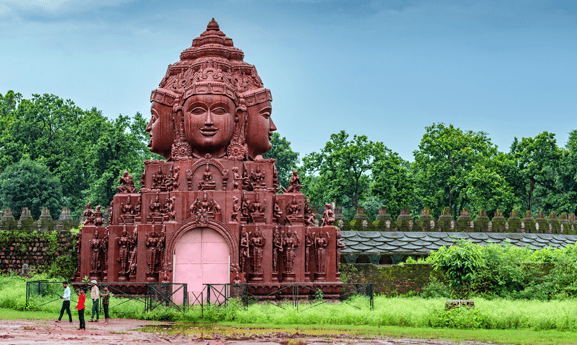
Divine Amarkantak (188 KM)
Situated at an altitude of 1000 m, Amarkantak is a well frequented Hindu pilgrimage center that is popularly known as ‘Teerthraj’ – ‘the king of pilgrimages’.
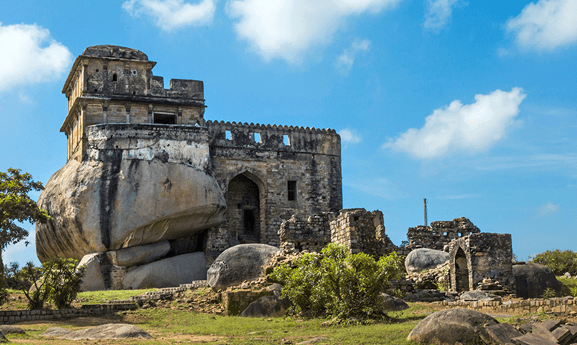
Funfair of Jabalpur (160 KM)
Under the brightly lit moon, 100 feet tall mountains of marble change forms as the river Narmada passes through it. This view is so scenic that it stays with you for long. But this is just one of the